Lipid metabolism controls neural crest EMT
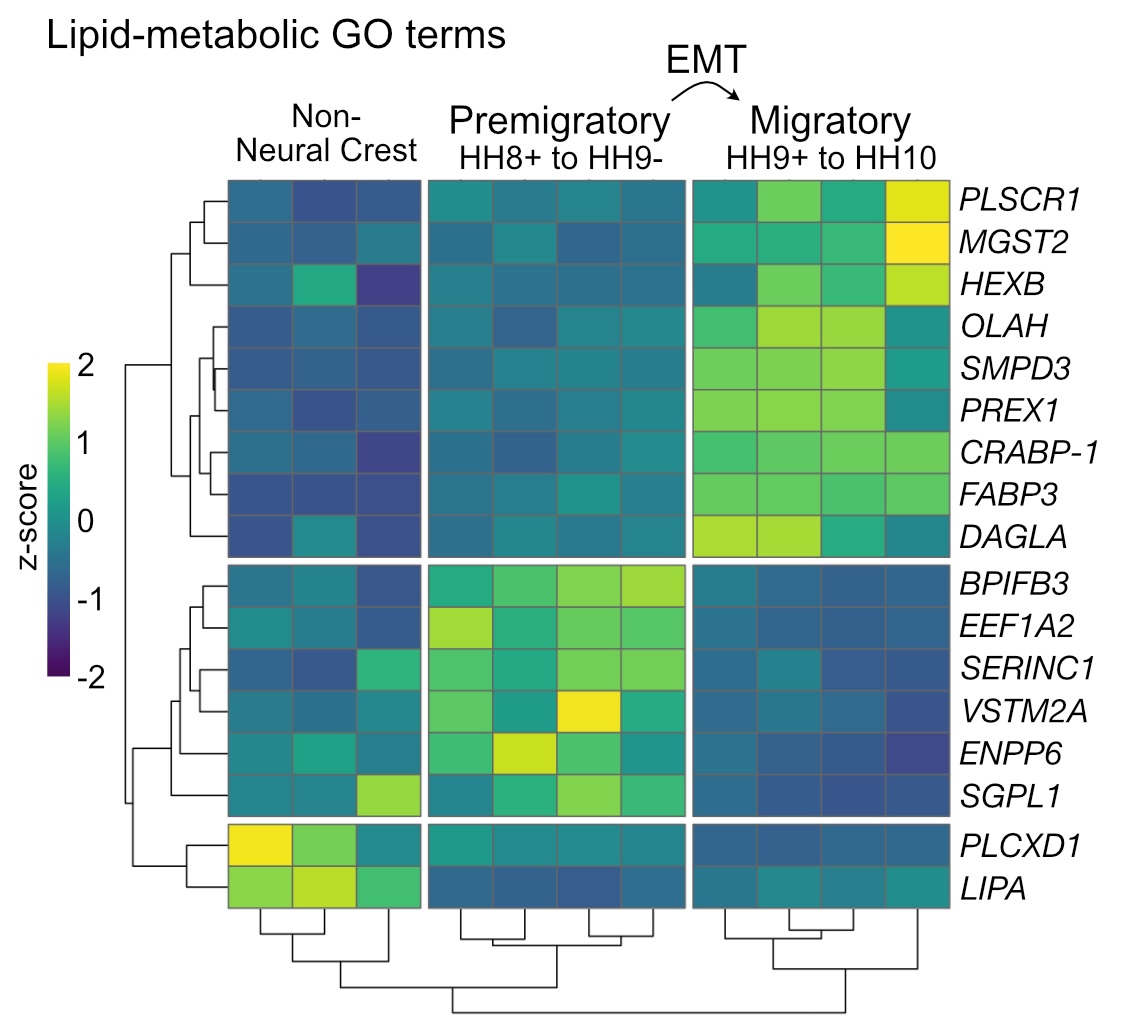
We are beginning to appreciate that EMT is often punctuated by changes in expression of diverse lipid metabolizing enzymes, raising the question: what is the function of lipid metabolism during EMT?
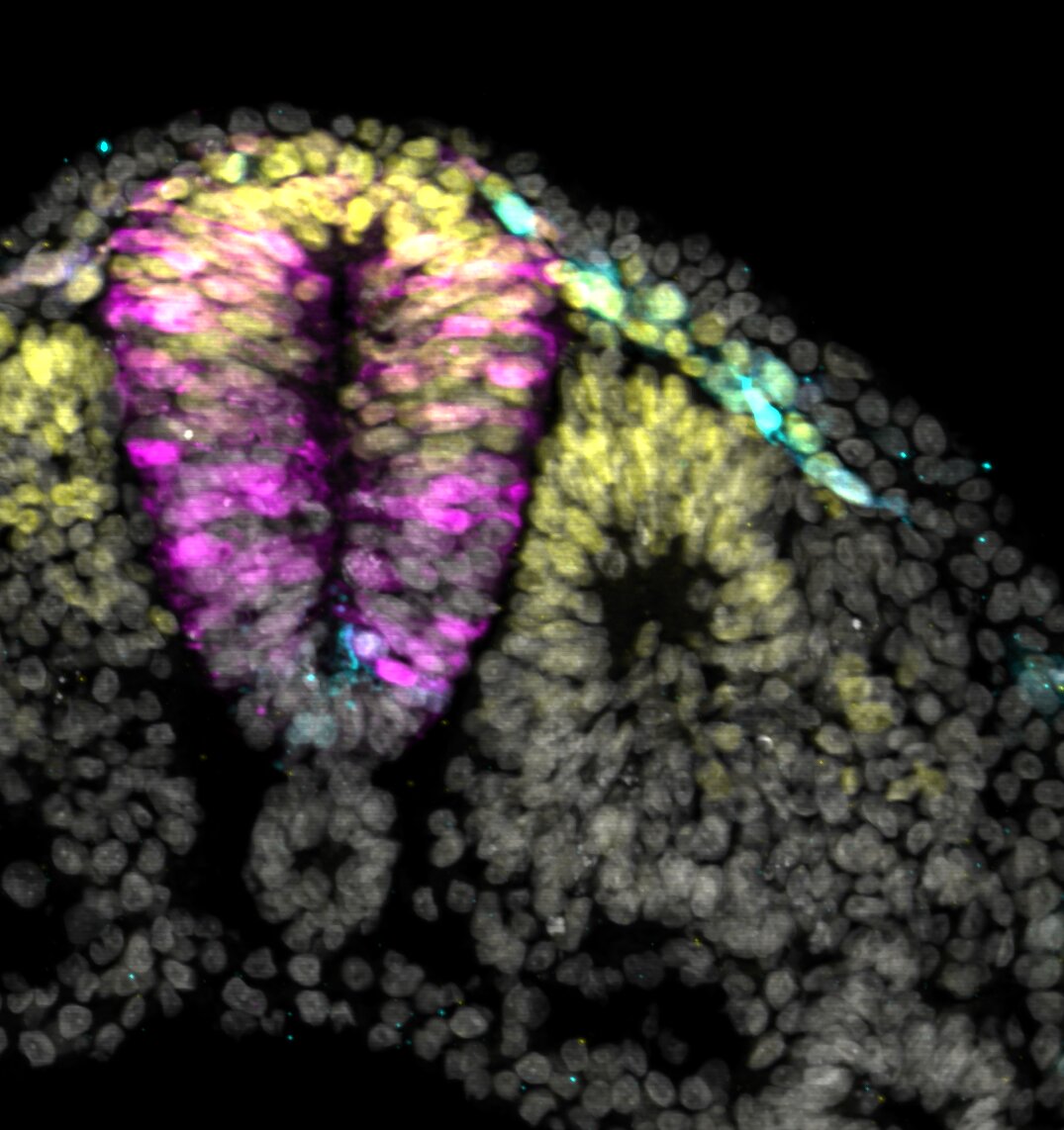
To date, we have described the mechanism by which the production of the membrane lipid ceramide by the enzyme nSMase2 is necessary for neural crest EMT (Piacentino et al., 2022). Our work shows that ceramide production in the neural crest is necessary for endocytosis, which promotes cell signaling, transcriptional regulation, de-adhesion, and delamination.
Using transcriptomics, reporter constructs, and gene editing, we are now deciphering how different lipid metabolizing genes are transcriptionally regulated across embryonic space and time (Piacentino et al., 2024).